
Ecommerce
Product discovery and conversion
Bring search, content, social campaigns and paid media into one practical digital growth plan. Prioritise the channels that fit your audience, then measure outcomes and refine work using data instead of guesswork.
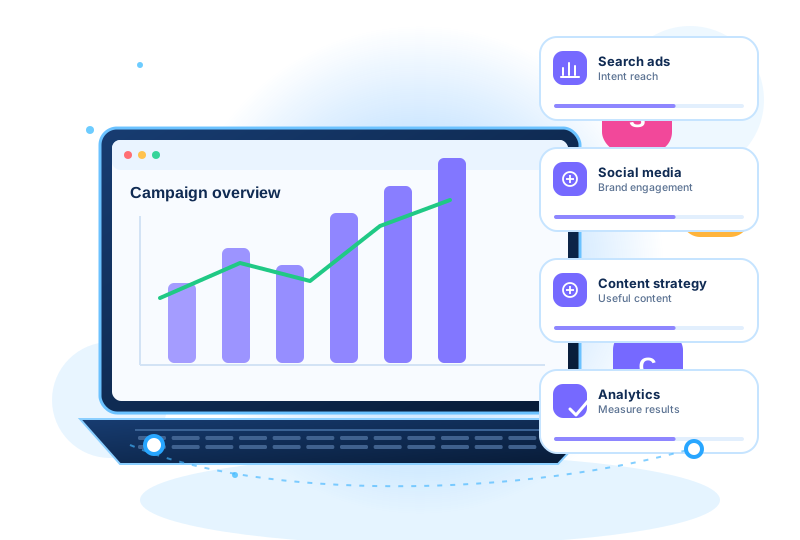
Digital marketing uses online channels to help a business be discovered, explain its value and turn relevant visitors into enquiries or customers. The right mix can include SEO, content, social media, paid advertising, email and analytics based on your goals and resources.
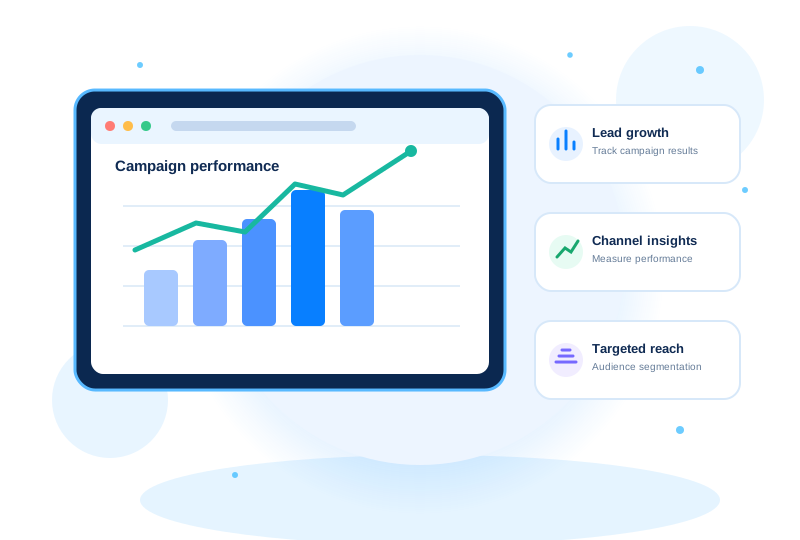
Coordinate digital channels around the customers you want to reach.
Product discovery and conversion
Local visibility and qualified enquiries
Service pages and local awareness
Course visibility and admissions
Destination and seasonal campaigns
Educational content and relevant enquiries
Content-led demand generation
Local leads and service discovery
Thought leadership and lead generation
Brand visibility and campaign support
A coordinated approach helps make online growth more measurable.
Improve how relevant pages serve search intent.
Answer the questions buyers have before making a decision.
Coordinate paid and organic channels around audience needs.
Measure leads and conversions with suitable analytics.
A practical growth process from research to refinement.
Review audience, competitors and current performance.
Agree measurable goals and the right channel mix.
Produce content, landing pages and campaigns.
Review outcomes and prioritise the next actions.
Scope and fees depend on channels, workload, ad spend and agreed deliverables.
For an audit and a limited set of priority actions.
For recurring content and campaign optimisation.
For coordinated search, content and campaign work.
For broader goals, channels and reporting needs.
Final availability, inclusions and charges are confirmed in the current proposal before purchase.
What to know before starting digital marketing.
Scope can include SEO, content, social media, paid campaigns, landing pages and analytics, depending on the agreed plan.
Channel selection should reflect the audience, customer journey, goals, budget and available evidence.
It can support lead generation when messaging, targeting, landing pages and follow-up processes are aligned. Results vary by market and execution.
SEO and content can be scoped as part of a digital strategy or as separate workstreams.
Ad spend and service fees should be clarified in the proposal; they may be separate costs.
Reporting can include agreed measures such as qualified enquiries, conversions, cost per lead and organic visibility where tracking is available.
Timeframes depend on channel, competition, budget, website readiness and the starting point. SEO and paid campaigns behave differently.
Yes. An audit or focused pilot can help set priorities before expanding the scope.